Looking For Something? Search.

Showing posts with label economy. Show all posts

Tuesday, April 16, 2013

Mayoral Ambiguity, Previously Unpublished Material (The Fall of the Middle Class) PLUS Remembering Chi Cheng and a 1971 Dodge Dart

Issue 4, Volume 2


Mayoral Ambiguity, The Fall of the Middle Class (Pt.1), Remembering Chi Cheng


Oh, the life of a writer...should I have been one. It's my last day of 'holidays' - I put Bronx IV by the Bronx on my turntable, and then step outside to check the mail. My e-bay order didn't arrive today. I then go to the fridge to realize that I'm out of organic Cola. Here's a plug for the people at Blue Sky Soda, fantastic non-caffeinated real cane sugar cola. Truth be told I wouldn't drink any type of cola because it would hurt my stomach. But not this stuff. This stuff I could drink until I get diabetes - which I'm assuming is less likely from a cane sugar cola than it is from a HFCS cola (not true). But we already had this discussion back in Issue 2, Volume 1. But seriously, should I be a professional writer, I imagine that life would be much like it is today. Just put on some music, lament about being out of organic cola, and sit down and git 'r done. But it's not.

Our On The Streets comes from the vague idea that winter is going to be over sometime soon. This Sub-lime Dodge Dart. Sure, I said it is a 1971, but it really could be a 1970-1972, which is when they started using this particular front grille and bumper, and moved the back bumper into a sloping trunk line. It would be redesigned again in 1973 for federal crash standards, meaning they had to revise the front bumper for 5 mph impacts. This car, well, can't really be dated because I don't believe it's authentic. But it's pretty to look at. The fat rear wheels on Centerlines, the GTS hood with the tach stuck on it, the wild paint, radiused wheel wells, and even a go wing- this car is for fun. We're assuming this car is a 1970 or 1971 because it has a central divider in the grille, assuming that's the original grille. In 1971, the Dart could be had with either of two slant six engines, a 318 V8, or a powerful 340 V8, developed for the 'Cuda in AAR format (for trans am competition). The Dart name has recently been ressurected on the new Dodge Dart, a car actually based on an Alfa Romeo, with a line of Alfa engines. The cars are really related in name only, and their compact stature. The Neon name fell out of favor with consumers, and the Caliber was a different animal altogether, so for sales purposes, Chrysler went back to the swingin' seventies (actually the Dart was made from 1960-1976 but the most recognized are likely the 67 to mid 70's versions) to pick out a fondly remembered name. The best thing about this car, is that I've recently seen it driving around again, meaning it must be just about warm enough to take your collector car out of the garage. 

Mayoral Ambiguity - Why Mandel Didn't Indicate His Intent To Run

There is always a time and a place to make the right move. Imagine dating for a second. Why do people wait so long to ask other people out sometimes? I remember for me, there was a hesitation because I thought maybe I hadn't gotten to know someone well enough, and maybe it wasn't the right time. What did timing have to do with it? Well I thought maybe if I waited until I felt that I was confident through some force of the universe, I'd have better chances. That was probably crap, and sometimes I waited so long I ended up doing nothing and the opportunity passed me by (not that I lament it now obviously, but we're drawing a comparison so stay with me). But with political process, timing is everything. Elections happen around and after or before certain events because of the prospect that you'll win if all goes well. And there are several factors that can play into that. Larger governments usually seal their deals around budget promises (the promise to cut tax, the promise to spend on health and education, etc. So when you go to the polls you think, "this party said a tax cut is coming up soon, maybe that won't happen if we elect someone else!" Or on a more extreme scale, how about calling an election after you just called your troops home from war. People might think of you more as the person that brought home the troops rather than the person that left the troops in there for the entire other 90% of your term. 

Really, this is why I think Mandel dodged the question of whether or not he was going to run for Mayor again on the mayoral address to the city. Aside from the lingering dissatisfaction about a solid framework for the Arena deal, it was at a time that the city had 600,000 potholes to fill, and winter runoff saw water become super chlorinated and disgusting to drink. Should Mandel choose that time to announce he's running, you'd be thinking, "yeah, but the water is disgusting, and we have a huge pothole problem! Fuck this guy!" But if we should all happen to wait until June, when the potholes are filled, and the water tastes normal, and the weather is nice, you'll probably stop thinking about how bad things were.

I think Mandel would probably just say that he wasn't thinking that, he was just undecided. What I've heard is that being mayor can be a monotonous position. I know this, because I stopped playing Sim City Social entirely. Don't forget that if a politician says they aren't that smart, they're probably lying. Keep in mind, this isn't an accusation of some sort of conspiracy, but the type of slight of hand, and positioning that happens all the time in political circles. We're just not used to it at such a local level. 

Of course, we'll have full election coverage when that happens.

Unpublished Material - The Fall of the Middle Class (Pt 1.)

This was a little difficult to do. I have been writing for issue 4 for a few months now, and the idea of packing everything into one part was starting to get ridiculous, and I'm sure you wouldn't want to read all of that in one shot. So I give you previously unpublished material - the fall of the middle class part 1.

The Commercial Revolution Part 1 - Where Are We?
(News Source: Global National)
British Columbia Securities Commission released this week numbers regarding Canadian debt. Donna Friesen on Global National read the lines, "you might be surprised at who's struggling." Actually, I wouldn't, it turns out it is the 'lower spectrum of the middle class earners' who are struggling, which we might have expected. All in all, they found credit delinquencies were down, but most people are only making minimum payments due to their high debt load. BCSC notes that people want instant gratification as opposed to saving for things, thus they're taking on more debt. Here's the part where I disagree.

If you read Part 2 of our topic on the Commercial Revolution in this blog, you'll find that's not really the case. History has driven us here. Ultimately, we don't want any more than what our parents or grandparents had. As bank economists weigh in, they say that earning wages are not keeping up with inflation. Thus it's not as if we're necessarily a society of instant gratification; we just want the lifestyle our older family members had, but the idea to save up cash for that is ridiculous. Case in point, Perspectives, a Stats Canada publication on socio-economics wrote in their Summer 1993 issue, that in 1970, the average Canadian wage was $5700 per person. The Average price of a new car in 1970 from the U.S. Vehicle Technologies Office was $3542 (let's say 1:1, and also not forget there's a confounding factor here where people may have purchased more expensive cars, it's not necessarily cetibus parabus). According to the Globe and Mail from Frozen Out December 27, 2012, the average Canadian housing price is roughly 5 times the average yearly income of Canadians, up from roughly 3:1 in the mid 1970's. You know what you'd have cash to save up for if your mortgage payment was only 3/5 of what it currently is? Probably a new car. But wait? Could you? In 1970 your car cost 62% of an entire yearly income. Now? The average price of a car according to the Wall Street Journal in September 4, 2012, was $30,274, while the average wage of a Canadian (non attached male) is $39,900. So the price of a large consumer good like a car has moved from 62% of a current income to 76%. In part two, I've listed some explanations as to why this might be through history, but ultimately the purpose here: to show that we aren't just a society of individuals that need instant gratification. If all we wanted was a similar house and vehicle to what our parents had at our age, our income has decreased wildly in relation to how much those two things would cost. 

Not to mention, recently bank economists indicated that Canadians are working longer hours, more hours, and the middle class wage ratio has dropped by 37% looking at 2011 data in relation to the mid 70's. That means, versus our parents, we work 37% harder to get the same things, or face earning 37% less if we work just has hard. 

I remember watching Michael Moore's documentary Capitalism: A Love Story, and the saddest part was when he was with his father, a 33 year employee of General Motors, looking at the GM factory that had been shut down. Only Moore's father worked, and he spoke about how after his mom picked up the kids, she would swing by the factory to pick up their father, and they were so excited to see him. You could see in Moore's father's eyes how much he had enjoyed that period of time. Moore discussed how one UAW wage earner could easily afford a house, two cars, a vacation home, to send his kids to college, and had good medical insurance, and a great retirement plan after they were done working. Life was good. Part of feminist advancement in the work place (and I'm not saying this to be anti-feminist, I'm saying it strictly economically) was due to necessity; after recessions in the late 70's and early 80's, and the break-down of the manufacturing sector, it required both partners to work to earn the same amount. Essentially, everyone had to work to stay afloat. And now we're finding we can't even do that, so we're simply relying on credit. As long as our income is still more than our debt, we'll pay it off some time. Right?

Ultimately to say we are just a generation of instant-gratification seekers isn't true. We believe we should at least have things as good as our parents. Unfortunately, with the radical inflation, saving up to have things at least as good as our parents just isn't possible.

Remembering Chi Cheng of the Deftones

We lost a musical hero recently: Chi Cheng of the Deftones passed away, on April 13, 2013. After being in a coma since 2009 (a car crash left him in the state), his heart stopped. There were times when he was making some improvement. Ultimately all fans, family, and friends held their breath and waited. All our prayers and thoughts are with Chi and his family/friends, but at the same time, I think there is a celebration that he can move on to peace, and now, a time to reflect. 

Cheng initially joined the Deftones in the late 80's early 90's as their bass player. As the story goes, if I recall, I think it was either Carpenter or Cunningham who had won some law suit, and had spent all the money buying musical instruments. These friends, in their teens, in Sacramento formed a band, and eventually played live around California. Eventually Rick Ruben saw the Deftones live, but traded their demo to Maverick records for the Korn demo. Maverick signed Deftones, and has been their label since, with their first album, Adrenaline being released in 1995. Chi would release Around The Fur (1997), White Pony (2001), Deftones (2003) and Saturday Night Wrist (2006) with the Deftones. In addition to that, he also released The Bamboo Parachute (2000) - an album of spoken word. At the time of his car crash, the Deftones were working on Ethos, slated to be released in 2010. That album was scrapped entirely, and the Deftones went on to release instead Diamond Eyes (2010) with Sergio Vega.

Chi Cheng was always described by those that knew him as a soft-spoken and inspirational person, putting others first. He ran a program in his home town of Sacramento to help aid homeless individuals. He was a Buddhist and a Vegetarian among other things, the latter due to a strong conscience for being environmentally and socially responsible. 

Chi's playing style is very fluid, and there is no question he was instrumental in building the Deftones sound, which is a huge inspiration to so many.

If you are a fan of the Deftones, remembering Chi couldn't be done better than on April 20th, Record Store Day, where Deftones will release an album of live tracks from Adrenaline - early recordings with Chi very much involved. 

It's sad to lose a great musician, it feels like losing a great friend. But at least we can remember him, and his legacy will carry on due to his inspiration.

Letters To The Editor

istillhaveatapeplayer@gmail.com


Friday, December 2, 2011

Generation Failure (also) Road Rage? Ped Rage? Ween and a very old Map


Issue 17, Volume 1
December 2, 2011


Our on the streets portion is literally of the streets. This map is from a surveying company who published the Edmonton plan in 1920. What is really special about this map is the fact that Edmonton's development stayed very close to a plan that was laid out 90 years ago. In the map, there are interesting changes. For example, the way Edmonton is divided is differently. Instead of just about everything being in the North West, the city is divided closer to down town. 109th street becomes West 5th Street, although it is still numbered as the 109th street on the map. Allendale was known as Martin Estates, but of course, there were no houses there at that time. There wouldn't have been much past Whyte ave. I've seen photos of what Garneau block looked like in 1940. Very desolate. Generally this map described what happened in terms of lot development up to the mid 70's or so. Now we may know why it's so hard to get council to change their ideas on infrastructure development.


Generation Failure

If I was Ford, I would be upset. In fact, to look at this from a human perspective, to shed some light on the idea of bailouts, let’s say I amFord – make Ford a person, make them me. So I am Ford. I work really hard to balance my budget, and it hurts, because some people who are my friends (ie employees) can’t be my friends anymore because I just can’t afford to see them anymore. Some things I like to do, I can’t do anymore (let’s call those racing programs) because I can’t afford it. And some activities, and future plans I had that I was really excited about, well I had to cancel because I can’t afford it (let’s call those plans for future models). I had to get rid of some things I really loved, and I had to move into a smaller house (let’s call that the sell off of Jaguar, Land Rover, Aston Martin and Factory closures). But I managed to balance my budget. And I continued to make ends meet. But there’s this guy GM at work, and if he does well, I make less money, because there is only so much to go around. Maybe we work at a 100% commission job. If he wasn’t around to make sales, things would be great for me. Well he was going through some problems at home with his budget too. But his parents got involved, which was weird, because he was an adult, and they paid him a bunch of money, if he promised to move in for a while. He had to get rid of some stuff too…his parents made him. But they also gave him a bunch of money too. That really helped him get back to work. And now I don’t make as much money because he makes a lot. But at least it wasn’t as bad as those bank-guys I heard about. I heard their parents gave them a ton of money, and they spent it all, and became unemployed anyway, and now just sit at home and do nothing all day.

Like that exercise? We all understand both the inherent negatives of a bailout, IE the large amount of taxpayer dollars that are spent to keep a company from going under because of their contractual idiocy; because if they go under, there will be a bunch of taxpayers out of work, and long term consequences to the economy. But the way a free market should work, is that if one company drops the ball, other companies get larger market share. They can expand, and hire those workers put out of business by their own mistakes. Imagine GM goes out of business and Ford and Toyota take over GM’s market share. They are going to need to increase output, and they’re going to need workers, maybe skilled labor (UAW workers?) to help with that. Would GM’s demise really have ruined the economy? Probably not. The US and Canada could defend their actions, because absorbing GM, the child that should have never moved back into the house, they took it on as an asset. Governments invest like people do. So apparently that makes that ok. Yeah, aside from the devaluation of a bunch of used cars, I don’t really see it that way. GM should have gone under.

Nowadays we use bailouts for all sorts of things. Countries bail out other countries. Governments bail out businesses. Sometimes you bail out your roommate (Sorry Jerms) or at least allow some sort of respite. If we’re so hell-bent on using bailouts, why not use them on something that we really need bailing out. Is it the 99% I am going to say here? No. But perhaps a portion of it.

Money Writer for The Metro Alison Griffiths discusses a possible bailout for a generation and demographic of people. These types of bailouts we usually file under ‘social program’ or ‘government grant.’ But what she says, not extrapolated to actually outline the framework of a bailout, makes sense. According to the B.C. Securities Commission, a recent study shed some frightening light on the state of an entire generation of Canadians that may go under. Imagine that 20 years ago you could still buy a brand new car without taking out a loan, and yes, it was still semi-possible to save for a house cash. Now that’s an automatic loan and mortgage. Imagine if in another even 10 years from now or less, suddenly the fashionable thing to do was just to continue to write off your debt and go bankrupt. From my time at the bank, people actually do this more than you might think. I can see it becoming a hideous trend in the future. This would undoubtedly lead to market failure. When you pay for something credit, it’s a promise that you’ll pay, through the credit agency, for something you bought, say a television. Now imagine that debt gets written off. Either the credit agency takes the hit, pays the company and the credit agency goes out of business; or maybe the television company has their own credit division, and they take the hit directly, lose the money. You can’t operate by giving things away for free. You can’t pay your employees or produce more things to sell, or even pay your overhead costs. Goodbye business! What B.C. Securities commission found was that either there will be no one to pay for anything, or everyone just won’t be able to pay their debt. This is my own extrapolation of their data. But look at the data. The BCSC found that the average 25-34 year old with a post secondary degree, designation, diploma or ticket makes only on average $31,640. That means, while minimum wage in our province is only $9.40, an entire generation of people with post secondary education are only making $15.21 an hour, assuming they’re working full time. What’s even more disturbing is the fact that upon graduation, even before seeking a job, new graduates on average already have $18,000 of debt. Shockingly $8000 of this is racked up between the ages of 17 and 20. And the unemployment rate for people in that age group is 14%, twice the national average. All this while 25% of people in the demographic group said they had done nothing or had no plan to pay down any of their debt, and also said they would have trouble if their paycheck was delayed by even one week. Finally, people of this age group (17-20) believe that they will make $90,000 a year. But people literally only 5 years older than them are only making $31,640 with the same education. Some of these youth will graduate in only two years, with $18,000 debt. Will we suddenly expect the economy to turn around in two years so that people can make $90,000 at 30 years of age? Of course not. Things will likely be much the same as they are now. Considering we are in what some call a double dip recession, there is likely to be another bottoming out of the economy soon, leaving us in 2 years maybe on the upswing, but probably on the part of the upswing that is about as good as where we are on the downswing now.

Alison Griffiths’ solution is a bailout package for a generation. A bailout package for an age range of people 25-34 to keep the economy from failing. To keep a generation from failing. She doesn’t describe how though.

This is where I come in. Really, how difficult would it be to bailout based on a student loan forgiveness basis? Not the entire student loan, and not for everyone. Of course that would be like paying GM when Ford did just fine. How about a percentage for each person. Say take the average, maybe that $8000 of $18,000. Does 44% of each student loan sound like too much? Then maybe just $8,000? What is reasonable?

Thus far, the Government of Canada feels that interest is a reasonable portion to cover, assuming you meet the criteria. A phone call I placed to Edulinx yesterday indicated that the Government of Canada will pay the interest portion of your student loan for a period of three years, to be re-evaluated after three years. I opted out as I didn’t know how the government program would appear on my credit report. Therefore, I never got as far as to find out what constitutes a qualification. But is this enough? Interest on student loans is 3%. It’s an open, non-amortized loan. So let’s say you owe $30,000. Is $900 really going to be an adequate chunk of that to help you at all? Or let’s say you owe the standard $18,000 average. Is a $540 check from the government going to really solve your problems? Well that’s not exactly how it works. Generally loans are amortized at prime+1% over something around 114 months. So that interest is actually calculated on each payment. That can add up, which is why some people like to pay off their student loan faster. Let’s assume interest stays at 3%. If you owe $18,000, and you make 114 payments, that’s $157.89 a month. But add in interest on that payment. There’s an extra $4.74 added to that monthly bill which means you pay $162.63 a month instead. For people who may have tight purse strings, that $4.74 might be worth it. But then you sort of have to think that $4.74 might be had by cashing in empties. So the interest? Yeah, that’s not much.

It's clear that this generation needs something more. I understand that Alberta has created a ton of jobs recently, but that is still not enough. Appropriate credit handling is the problem; and for many, it's already too late.

Cars versus Pedestrians...Everyone's Angry.

I was walking to my car today (I have the pleasure of being able to be a pedestrian and a motorist) when I saw a guy in an Infiniti pull up to a light, planning to turn right. He didn't enter the intersection, or even cross the stop line, but the pedestrian felt the need, just because she was surprised, to shake her head at him. The point of that, I was unsure about, the motorist wasn't doing anything wrong. In fact, pedestrians often do a lot of things that are illegal and put themselves at risk. For one, you're not supposed to cross once the hand starts flashing. That pretty much goes out the window downtown. People will downright go on a yellow, just like a car turning left. But if a car turning left tries to turn on a yellow, and a pedestrian runs across the street, then that person can't turn. Now the motorist is angry and impatient.


Sarah often tells me stories about how someone has sort of raged against her, and got angry in traffic. I wonder what would want to make any grown man physically harm my girlfriend. I have never been angry enough at anyone to warrant wanting to try and intimidate physically or mentally, a woman. Now I understand I'm engendering this here, but the old adage that you don't hit a girl still rings true to me. I apologize if this is creating a gender gap. But we should all just relax a little. 


Quite frankly, I couldn't care less if you get mad, because I'm doing the speed limit, and you can't get around me. Unless you have diarrhea, and are trying to get home (who hasn't this happened to) in which case, okay, I have some sympathy for your frustrations (but likely they're not pinned to any other specific motorists). But this rarely is the case. We actually have one of the shortest commutes of any big city in North America. Our average round trip is actually 22.8 minutes according to a 2010 survey from CAA. If you live in Montreal, your average round trip is easily twice that. 


So be happy that you don't actually spend THAT much time behind the wheel and chill. Because if you should ever happen to harm my girlfriend because you are impatient and somehow getting behind the wheel turns you psycopathic, I will kill you. So keep that in mind.


Ween
Ween hasn't released a new album or anything, I just can't stop listening to them. The best music isn't always the new music. I recommend trying to get a hold of a copy of Quebec with the songs 'I don't want it' and 'its gonna be a long night' as well as 'transdermal celebration'. There is also the revered album The Mollusk. Just be prepared to laugh, and cry, as Dean and Gene Ween do whatever they want on every album.


Letters To The Editor
rbw2@ualberta.ca


Note To Readers
I am not using facebook anymore. Check out my co-blog with Sarah at http://lwofb.blogspot.com. As well, since I'm not using facebook I won't be able to easily announce what I'm doing with the blog anymore. So now, if you check on the sidebar, you can subscribe via email for when there's an update.


Thanks for putting us over 700!  

Thursday, October 13, 2011

This Download has 24 minutes left...a Out My Passenger Window experiment

Our on the streets issue has no photo this issue! We WANT YOU to send us an interesting photo, along the lines of something we would publish, in this one time only reader submission. Why not?


Issue 14, Volume 1
Thursday, October 13, 2011


24 Minutes
This week I thought I'd challenge myself. Having a lot to put together for the metal issue, and a short time, it's still in the making. Instead of not doing anything, I thought I would write and put together a new issue the simple way - the way I would just write my thoughts down before I decide to have so many different sections. The time frame? Twenty-four minutes while I wait for my GT-5 upldate to complete. Here are the issues.

Change - And A Government, what that means?


Obviously one of the largest topics that doesn't include a knife, unless you're talking about a proverbial backstabbing one, is the discussion of 'Change' and a proposed provincial election. Already the Wild Rose Alliance is dissing Redford for not calling an election, and not making $110 million worth of school funding reversals happen. This I'm glad about, because that's impossible.

Change is thrown around at every election. But what can we expect from politicians? Can we expect change at all? Politicians are people who win, or are appointed to, their jobs. They then go in to work like every other person on this planet, and I'm sure a lot of them phone it in. If they really wanted to change things, we probably wouldn't have things like recessions. It is because they change things we have some sort of liability to the way things were. Most changes for the positive in good economic times turn out to be changes that screw us over in bad economic times. Take healthcare for instance. Tommy Douglas was a man that inspired change. Universal healthcare was great. The problem is it's a huge liability when it comes down to affording it during times when Canadians are out of work and have to draw assistance rather than give it.

There's also the hero/villain boom/bust cycle. See, any politician that is in power when the economy takes off and times are good for everyone looks like a hero. Be a politician during a time of recession, and even if you keep your province out of it (Alberta did the best of any province by the way, and if Canada did the best of any country through a recession than we obviously did pretty good - but we still had it hard) you're on the losing end. Any politician elected now is going to probably look like hell, and then not so bad, as their term extends out of a recession into somewhat of an economic recovery. It's like they're doing things, but really, they're not. It's the economy all along.

No One Wants To Hear About Your Cats


This isn't true. Sometimes we want to hear about your cats, but only in a very amusing sense, especially if it's followed by video of your cat doing something hilarious. Occasionally hearing about your cats is okay, given it's not the primary thing you want to focus on. So here's a guide about status updates:
-Don't talk about your fucking cats
-Don't talk about your religion or what you're doing with it
-Don't talk about your kids
-Don't talk about your divorce and/or child custody battles
-Don't talk about someone else's divorce
-Don't repeat the same type of post over and over again. For example, if you're a programmer, it's okay to talk about programming every once in a while, especially since your other programmer friends will get it (OMG PROGRAMMERS HAVE FRIENDS) kidding, of course. But if every post comes out to be something like "I spent all this time today reformatting my SQL to fit my DEV framework only to have by debug line code //you are not here and then I freaked out //RETURN and found out the database wasn't what we needed anyway. Or whatever.
-Facebook has this annoying deal of doing this thing where if you comment on someone's photo that has 'friends of friends' security clearance on it, I get to see it it my news feed, even though I don't know the person. I haven't decided if this is good or bad, because I've seen some fairly bizarre, and funny stuff of people I don't know at all. Have not seen nipples. So I guess it's bad.
-Don't write cryptic shit people don't get, because it's frustrating.

Here's a good rule of thumb: if it's none of your business, or if it's none of anyone else's business, or people wouldn't want it to be their business, then don't post it. If you got into an accident, are sharing an amusing link, especially SMBC comics, then it's all good.

INSTALLING
(this means I have some time left)

Idiocy in Idealism
I'm not going to comment on the occupy/99% thing here, this is fairly interesting, but I think it's hypocritical. I'm sure most of these people, given the chance to be in the 1% would. I'm not sure what they expect to happen either. A redistribution of wealth? Okay then. There is likely someone poorer than you too, so how about we make everyone in the 50%, including them, and use your 85% to get them there? I'm not specifically against this movement, I just get that this is part of the recession, and there are some economic changes that need to be made - like bailout packages. Back in the day, if something went bankrupt, it went bankrupt. You don't see Packards or AMC cars on the road. The idea is, in competitive markets, this should be great for competitors. That or people will want to get out of that market, because no one is buying what you're selling. Either way, it used to be the natural cycle of things. The problem is we let companies get way too huge, and form cartels, monopolies, and tacitly collude so they can screw us over. One company might have so many subsidiaries, that letting it die would put a ton of people out of work. It should have never been allowed to get that big in the first place.

Here's some other idealist isms that are driving me nuts right now:

Story of the Mermaid or the Whale
You've heard this one, where the gym says you want to be a mermaid or a whale, and the parable ends with it saying women want to be whales because their excess weight is love and experience. I have no idea how so many people thought this was a beautiful story and bought into it. What you need to do is let your body weight and idealism be about you when it comes to this type of thing. Carrying a lot of excess body weight (may not but) could mean that you are at risk of hypertension, diabetes, and a slow and paintful death So how about instead of thinking about being a mermaid or a whale, and if it means you're a mom, or have experience, or love to give, why not think about how you can be in a shape that allows you to be a strong, independent, loving woman for longer, and feel better about it.

Out Of Time


Letters To The Editor
rbw2@ualberta.ca

Upcoming Issues
-the Metal Issue - reviews, information, local bands and more!
-Halloween!

Our background is still pink due to October being breast cancer awareness month.

Thursday, September 8, 2011

Reader Poll, Summer Isn't Over - And Neither Are Job Concerns (also) Food Ingestion Idiocy, A Water Fall and Middle Class Rut

Issue 12, Volume 1
Thursday, September 8, 2011


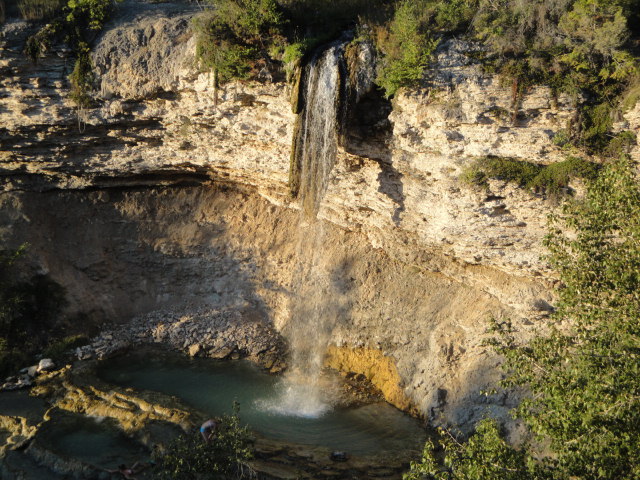
Our On The Street segment is actually well off the beaten path. Behind Fairmont, B.C.'s hot springs pool, there are the actual hot springs. Technically it is a type of man made waterfall. The natural pool is at the top of the cliff, and the small resort town built a modern type swimming pool in the side of the mountain. The pool is filled with the natural water, and then drained here every night, leaving these warm pools. This was on an RV vacation to the region. Alberta has the highest RV-per-capita ratio of anywhere in the world, believe it or not.

I couldn't bring myself to publish the end of summer edition yet. It's going to be above thirty all week.

Job Concerns For Students
What will you do when you graduate with a ridiculous amount of student debt? Find a job, hopefully. But economists aren't so sure. Latest studies indicate that, of new graduates in the next 5-10 years, up to 60% of them may only be able to find part time, low wage work. Many may find the entry level positions they are looking for, but for much less money than they had hoped for.

Of course, the myth here is that there are a lot of baby boomers retiring, and in the next 10 years, a lot of the next generation after that retiring too, which outnumber graduates, leaving a ton of jobs open. However, the ongoing recessionary woes and economic issues have led companies to downsize, leaving these vacant positions actually erased from existence. Most companies have also learned that students will work for much less than before, because competition has increased greatly. This allows companies to use foul practices like taking on full time interns for extended periods of time with no guarantee of a job at the end of it. It also allows companies to pay much less for an equal amount of labor, and extend fewer benefits.

Cyclically, eventually economic expansion (think 10 years down the road) will allow this cycle to reverse. For now, expect that your job search may be very difficult. The study also indicated that the majority of graduates would have changed jobs about 6 times before they were 30 years old. Monster.ca's study also showed that about 40% of current graduates under 30 indicated they were not in their desired field.

What can you do if you're expecting to graduate? First, work through school, don't let your student loans pay for everything. Being employable is the first step. Secondly, even if you are planning to get into something else, lock down a job after graduation as close to your field as possible, or something that has transferable skills. Working towards your desired goal is better; working farther outside the field for, say, more money isn't going to help. Employers are going to want to know why you took so much time away from the industry you supposedly are so passionate about. You are going to be left explaining to them that it wasn't enough money, or you thought you could have a better opportunity. They're going to wonder if you'll stick around long enough to make it worth while hiring you.

I Have No Editor: What Are You Ingesting? Common Myths about Food and Illness...
You might be familiar with my I have no editor sections. Well here's another one. A fantastic story.

I have (had) a friend who insisted that acupuncture had cured her of Celiac disease. I know there are many people who believe in eastern medicine practices, and find western medicine, well, less wholesome, or what have you. But understanding how the body works is a great first start, and understanding Celiac disease is the first step.


Feel free to read more in the above link. Celiac disease is a person's inability to digest wheat gluten, to the point that the sensitivity kills parts of your gastro-intestinal tract. There is no treatment or cure, but there is cutting gluten out of your diet. Oh wait, pardon me, there is a cure, and it's called acupuncture?

No.

There is the suggestion that our bodies weren't meant to digest wheat gluten in it's certain format. I say that because many different types of grasses and wheat strains may have been bred together over long periods of time making these grains outside of what the human body would normally tolerate. This is one speculation as to why something we commonly eat is harmful to so many people.

But wait. Here's the line that's important. Something we commonly eat is harmful to so many people. In fact, most of our food can be harmful to us.

If you want to avoid western medicine, you might want to try avoiding medicine entirely by trying to eat healthy, and you'll be okay.

The reason we run into problems a lot of times with our GI tracts is because we simply don't eat right. There are enough documentaries, studies, books on the subject, and our own physicians tell us time and time again that things like proper portion control, and proper balance in our diets are way off. For example, most of the people I know skip breakfast. This is a good first step in getting diabetes. Your breakfast should include something with fiber in it so your GI tract has something to digest. You should also be getting protein, carbohydrates, vitamins and minerals. So basically, something from all the food groups. What you don't need is sugar, or salt, or fats (well most fats).

I know food tastes good, but you will die if you don't eat properly. The sheer stupidity of thinking that you could have acupuncture and all of a sudden not be Celiac scares me quite a bit, because it means people are not being informed, not informing themselves, or just aren't listening. And I'm a believer in acupuncture too. Years ago, after a head on collision, it was the only thing that helped my shoulder after much physiotherapy.

Please, be informed about what you eat. Lest you become a liability to yourself, and your loved ones, not to mention a strain on the healthcare system and tax payers. All the while supporting questionable methods of food processing and shutting down small farmers. Actually, while you're becoming informed about what you should be eating, maybe watch Food Inc. again.

New Music: Middle Class Rut
Middle Class Rut, from the home of the Deftones, Sacramento, CA, recently played here with the Sonic Boom Festival. Their current single, New Low that hit the airwaves in October 2010, but didn't start getting radio play (or SAT play) until much later. That single has peaked at #5 on the US alt rock charts, off of the album No Name, No Color. Believe it or not, the band has actually been around since 2006, but with only a few non-charting EP's to their credit.

So will M.C. Rut continue to rock us in the future? A label deal means they have a new album out in 2011, even before their second single, a re-release of Busy Bein' Born hits the radio stations. But will they be all that successful? New Low is a great song that employs a simple chord structure, repeats itself, and drops out or brings in more loud noises as necessary for effect. It's actually pretty clever, but simplistic song writing.

How does the rest of the album compare? Well it's loud. I'm actually surprised that this is considered 'alt rock' and not just straight rock. In the late 1980's or early 1990's, songs like Busy Bein' Born would have been considered post-hardcore alongside greats like Helmet. The influence is definitely felt here. Can I call Zack Lopez a combination of former Filter singer Richard Patrick and the venerable Perry Farrell of Jane's Addiction. Indeed, 25 Years sounds like a faster, harder Jane's Addiction song. But this album is noise throughout. Even the supposedly quiet So Long ends with Lopez hitting the high notes in a screamy-fashion.

There is nothing here we haven't heard before. There are even some tricky Rage Against The Machine type riffs. But the sound is mostly Jane's Addiction, and some loud 90's post hardcore.

So where does M.C. Rut go from here? Well apparently on to another album. I should say that I liked the album, but I felt it was fairly repetitive and not really original at all. It's just some music of a style we haven't heard for a while. It's good to hear there is someone still doing it. But I hope they do it a little better with their next release. I give it about a 6/10.

READER POLL
If you have a second, I'd love for you to take our reader poll. The results will be published in the next issue. It'll give me a chance to quantify what you liked or disliked about the blog. It'll also give you some idea of what other people are interested in (in respect to the blog) and hey, polls are fun to take.

Take the poll here:

Results here:
http://www.zoomerang.com/Shared/SharedResultsPasswordPage.aspx?ID=L26Z2L2Z2Z2Q

Letters To The Editor
rbw2@ualberta.ca
and remember to send me this for future issues:
-what did you enjoy the best this summer (activity wise)?
-what did you miss out on?

Thank you, as always, for reading.

Thursday, August 25, 2011

Economic Collapse (plus) Farewell Layton, The Joy Formidable and a '58 Vette


Issue 11, Volume 1
Thursday, August 25, 2011

Our On The Streets section occurs in a parkade, where I often see this panama yellow '58 Corvette, complete with appropriate year of Alberta plates. The iconic American sports car seen here was still in its' infancy. Imagine that only a few years before this car could only come with a 'blue flame' inline 6 cylinder. It was the late 60's where large eight cylinder engines with more displacement and more power started to be pushed by guys like Virgil Exner, or GM president Harley Earl, champion of the 'Vette. Still a C1 (first generation corvette) in 1957, the Corvette would gain and be the poster child for Chevrolet's 283 cubic inch V8 putting out 290hp in fuel injected form. The 1958 model gained the twin headlights and more chrome seen here. Although carbureted engines would become the more popular option until the 1980's, in the late 50's Chevrolet wanted exotic sports car status. One of the most exotic and winning race cars of the era was the Mercedes SL300 (gullwing) sports car, which featured fuel injection. The 283 engine could be even had in trucks, and sedans like the bel-air 150/250 versions. This car frequently is seen in the parking lot, and is sometimes replaced by a Jeep Grand Cherokee on inclement weather days. With summer drawing to a close, this individual may not be taking his prized possession to work too much longer. By the way, tying it all in; there was a steep recession in 1958. Between 1958 and 1964, things weren't so fantastic, but they weren't nearly as bad as they are now. Probably was one of the reasons the Edsel failed so hard, thinking back.

Economic Collapse: The Second Recession
If you've ever taken a look at a chart at a bank, usually there's one on the wall somewhere. These charts are available for special order every year, and feature just about everything on them. They include the value of the dollar, value of gold, GDP, market index (TSX, S&P, NYSE), price of oil, interest rate...basically everything you could use to see how an economy is doing, except maybe unemployment (and I don't know - that very well could be on there). If you happen to take a look at one of these graphs, you'll notice that just about everything except the price of oil (which seems to go up and down based on no other factors) is always consistantly up. That means if you wait long enough, the mutual funds you hold will eventually be worth more than they are today. Meanwhile, you'll notice they take a dip and rise back up about every 10 years or so.

What you don't see: them take a dip, plateau, slowly rise, and then take another dip within 5 years.

Indeed Benjamin Tal, Cheif Deputy Economist at CIBC believes we are inches away from being in the depths of another recession. Himself, and other economists are calling this the worst period in economic recovery since the great depression.

Consumer confidence is down, says Tal, but it's a great time to buy houses. That is because the interest rate is so low, and the market is down. Meanwhile, we are experiencing a horrible time of 'stagflation' - inflation in price without economic growth. Usually what you get paid, coincides with price increases. Except one day we had huge inflation, and now everyone puts everything on their credit cards, and finances stuff. Alright, moving along...

It was estimated that inflation was about 3% overall for Canada, which wasn't too bad. The things that inflated the most, however, are things we're going to feel. So while the price of a flat screen television might have changed from $680 to $700.40, we don't necessarily need to buy a flat screen T.V. this year. We can hold on until our wage rate goes up. But what do we need to do. Well we need to eat, and put gas in our cars. Gas was up a staggering 27% over this time in 2010. Food was up something like 14%, and the cost of home insurance and utilities, 9%. Meaning, on average, paying for things you actually used went up about 17% in price. So if your household bills, say, your utilities cost you $300/mo, gasoline $200/mo, and groceries about $300/mo for a grand total of $800/mo, you would be paying $936 a month now without any increase in volume, service, amount, or pay rate.

So, what's the solution? Well, unfortunately, for Canada, all we can do is hold on. This isn't a regular recession. A regular recession would see interest rates stay low, and consumer confidence stay high to assist recovery. However, this recession was created by the United States nearly defaulting, and their dollar devaluing so much. We depend on our dollar being lower than theirs, because we are largely an exporting nation. While we hold our interest rates low (great if you're paying back prime + ___ loans or buying a house) to keep our money as worthless as possible, it's not helping.

Here are some great economic tips during this time:
-buy some mutual funds if you can afford it.
-pay down as much debt as you can right now while interest rates are low.
-find ways to save. Shut off the lights, wear a sweater, use alternative transportation.
-buy locally -> spend money on Canadian products, that will help our own economy
-eat locally -> buy your groceries at a farmers' market, etc.

These will inspire Canadian market consumer confidence, and as well, save you money, while you don't have to resort to eating KD. They will assist at a local level first, which is where the growth needs to stem from at this point.

Good luck!

Jack Layton; A Few Words
The honorable Jack Layton recently left us due to that ugliest of C words - cancer. I have only a few words to say. I think whether or not you voted for him, or particularly liked him, you recognize at this point now what he is worth to Canada as a whole, and Canadian politics. Layton brought the NDP, and its new-generation politics to become the official opposition, after being irrelevant for years. He, and the party, were champions of welfare and equality. Even if you are a Conservative, you recognize that you live in Canada, and things like 'social programs' are essential. That's what Layton stood for. Not afraid to poke fun at himself, we remember him smiling into the camera with a pitcher of beer from a pub during the Olympics. We remember him stealing Rick Mercer's bike on the Mercer report. While the NDP will get a new leader, there likely won't be another like Layton, at least for a long time to come. I would like to extend my thanks, not as anyone who is rah-rah NDP (I'm not going to reveal my political affiliation here, because it's irrelevent) to Jack Layton for his fight for Canada.

Thanks.

The Joy Formidable: The Big Roar
So once upon a time, there was this band I'd never heard of that was all of a sudden put on the Sonic Boom lineup list. And then they had sort of an infectious song called, "Whirring."

Well, I have news for you, if you've only been listening to this band on the radio. That song has a wicked double kick section that only a metal enthusiast would be able to truly appreciate that they don't play.

I have more news for you: female vocalist lead bands are...making a comeback? Making headway?

I've never seen such a time where male and female in rock music had been so equal, except at certain points. The first was the inception of rock n' roll. June was on Johnny and the rest of Sun Records' tour. Then there were a few bands along the way, until the late 60's, when Joplin killed it as the lead of Big Brother Holding Co. And then during the punk movement, there were artists like Patti Smith became famous.

But then there were the 80's, and that was horrible. There was the 90's and that was horrible too (except for grunge) and the 2000's which was also horrible. And there were the spice girls. That ruined it for everyone.

Now girls don't sing in girl groups anymore. They take control of groups like the Joy Formidable.

So how does that album shape up? Aside from the fantastic Manchester accent of Ritzy Bryan, this album is the standard in alternative rock today. A lot of synthesizers. Luckily there was that great wall of British fuzz guitar throughout, with some punk undertones that I could hang on to. Had this been another synth-pop-alt-rock standard equipment group, I wouldn't be talking about them right now. But overall, their song writing is solid.

The Joy Formidable released The Big Roar, their first full length on January 24th of this year, and it took a while, since it was their first full length, to catch on. It hit only 31 in the UK, but 8 on the US charts. Meanwhile, Whirring, the first single off of that album has hit 10 on the CAN charts, 38 on the US Rock charts, and hasn't placed on the UK charts. Crazy, eh?

The first single, Austere was actually a re-release of their 2009 UK single. For this, the album is a little disjointed. While Whirring is upbeat and fast, and sometimes a wall of noise, other songs are darker, but all with a fairly steady pace, and a lot of distortion. This wasn't a band that was influenced by The Cure, for example, or even maybe The Clash. Instead we get a lot of classic brit-rock licks, as if AC/DC snuck in there somewhere and lent them their huge Marshall stacks (indeed TJF does play with big Marshalls) but then, the sensibility of brit rock got angry and New Order showed up and gave them some keyboards too. Actually, I could probably draw a pretty good line between Joy Division and The Joy Formidable, especially with Rhydian Dafydd, bass player, indicating the album is emotionally manic depressive.

Highlights include the extended version of Whirring and other tracks like The Everchanging Spectrum Of A Lie, which force the listener to enjoy sonic walls of music. Then there are more simple tracks, like the closing The Greatest Light is the Greatest Shade that are simply enjoyable to listen to because of their poppy and simple beats.

You could easily slip this album into your 'sounds of summer' collection. I'm glad to hear a synth pop band that hasn't abandoned it's rock roots, and can still make a wall of distortion in a minor key. I rate this album about a 6.5/10. I feel TJF still has a ways to go before doing something that will really hit audiences hard and chart well. This album, being some newer songs, some written on the road, and some older EP re-releases isn't cohesive in all places, and certainly not linear. But it's a great first album from a band that you can bet will be back in a big way, if they can keep the excitement of songs like Whirring going on their sophomore effort.

Letters To The Editor
rbw2@ualberta.ca

Next Week
-It's the end-of-summer edition, with all sorts of cool wrap up articles, many suggested by you, the reader. What did you love about this summer? What did you hate? The sounds of summer music list, and photos!

Milestones
Our fashion issue proved to be our most popular issue, and we now have over 400 readers. Thank you!