Looking For Something? Search.

Showing posts with label socioeconomics. Show all posts

Friday, December 2, 2011

Generation Failure (also) Road Rage? Ped Rage? Ween and a very old Map


Issue 17, Volume 1
December 2, 2011


Our on the streets portion is literally of the streets. This map is from a surveying company who published the Edmonton plan in 1920. What is really special about this map is the fact that Edmonton's development stayed very close to a plan that was laid out 90 years ago. In the map, there are interesting changes. For example, the way Edmonton is divided is differently. Instead of just about everything being in the North West, the city is divided closer to down town. 109th street becomes West 5th Street, although it is still numbered as the 109th street on the map. Allendale was known as Martin Estates, but of course, there were no houses there at that time. There wouldn't have been much past Whyte ave. I've seen photos of what Garneau block looked like in 1940. Very desolate. Generally this map described what happened in terms of lot development up to the mid 70's or so. Now we may know why it's so hard to get council to change their ideas on infrastructure development.


Generation Failure

If I was Ford, I would be upset. In fact, to look at this from a human perspective, to shed some light on the idea of bailouts, let’s say I amFord – make Ford a person, make them me. So I am Ford. I work really hard to balance my budget, and it hurts, because some people who are my friends (ie employees) can’t be my friends anymore because I just can’t afford to see them anymore. Some things I like to do, I can’t do anymore (let’s call those racing programs) because I can’t afford it. And some activities, and future plans I had that I was really excited about, well I had to cancel because I can’t afford it (let’s call those plans for future models). I had to get rid of some things I really loved, and I had to move into a smaller house (let’s call that the sell off of Jaguar, Land Rover, Aston Martin and Factory closures). But I managed to balance my budget. And I continued to make ends meet. But there’s this guy GM at work, and if he does well, I make less money, because there is only so much to go around. Maybe we work at a 100% commission job. If he wasn’t around to make sales, things would be great for me. Well he was going through some problems at home with his budget too. But his parents got involved, which was weird, because he was an adult, and they paid him a bunch of money, if he promised to move in for a while. He had to get rid of some stuff too…his parents made him. But they also gave him a bunch of money too. That really helped him get back to work. And now I don’t make as much money because he makes a lot. But at least it wasn’t as bad as those bank-guys I heard about. I heard their parents gave them a ton of money, and they spent it all, and became unemployed anyway, and now just sit at home and do nothing all day.

Like that exercise? We all understand both the inherent negatives of a bailout, IE the large amount of taxpayer dollars that are spent to keep a company from going under because of their contractual idiocy; because if they go under, there will be a bunch of taxpayers out of work, and long term consequences to the economy. But the way a free market should work, is that if one company drops the ball, other companies get larger market share. They can expand, and hire those workers put out of business by their own mistakes. Imagine GM goes out of business and Ford and Toyota take over GM’s market share. They are going to need to increase output, and they’re going to need workers, maybe skilled labor (UAW workers?) to help with that. Would GM’s demise really have ruined the economy? Probably not. The US and Canada could defend their actions, because absorbing GM, the child that should have never moved back into the house, they took it on as an asset. Governments invest like people do. So apparently that makes that ok. Yeah, aside from the devaluation of a bunch of used cars, I don’t really see it that way. GM should have gone under.

Nowadays we use bailouts for all sorts of things. Countries bail out other countries. Governments bail out businesses. Sometimes you bail out your roommate (Sorry Jerms) or at least allow some sort of respite. If we’re so hell-bent on using bailouts, why not use them on something that we really need bailing out. Is it the 99% I am going to say here? No. But perhaps a portion of it.

Money Writer for The Metro Alison Griffiths discusses a possible bailout for a generation and demographic of people. These types of bailouts we usually file under ‘social program’ or ‘government grant.’ But what she says, not extrapolated to actually outline the framework of a bailout, makes sense. According to the B.C. Securities Commission, a recent study shed some frightening light on the state of an entire generation of Canadians that may go under. Imagine that 20 years ago you could still buy a brand new car without taking out a loan, and yes, it was still semi-possible to save for a house cash. Now that’s an automatic loan and mortgage. Imagine if in another even 10 years from now or less, suddenly the fashionable thing to do was just to continue to write off your debt and go bankrupt. From my time at the bank, people actually do this more than you might think. I can see it becoming a hideous trend in the future. This would undoubtedly lead to market failure. When you pay for something credit, it’s a promise that you’ll pay, through the credit agency, for something you bought, say a television. Now imagine that debt gets written off. Either the credit agency takes the hit, pays the company and the credit agency goes out of business; or maybe the television company has their own credit division, and they take the hit directly, lose the money. You can’t operate by giving things away for free. You can’t pay your employees or produce more things to sell, or even pay your overhead costs. Goodbye business! What B.C. Securities commission found was that either there will be no one to pay for anything, or everyone just won’t be able to pay their debt. This is my own extrapolation of their data. But look at the data. The BCSC found that the average 25-34 year old with a post secondary degree, designation, diploma or ticket makes only on average $31,640. That means, while minimum wage in our province is only $9.40, an entire generation of people with post secondary education are only making $15.21 an hour, assuming they’re working full time. What’s even more disturbing is the fact that upon graduation, even before seeking a job, new graduates on average already have $18,000 of debt. Shockingly $8000 of this is racked up between the ages of 17 and 20. And the unemployment rate for people in that age group is 14%, twice the national average. All this while 25% of people in the demographic group said they had done nothing or had no plan to pay down any of their debt, and also said they would have trouble if their paycheck was delayed by even one week. Finally, people of this age group (17-20) believe that they will make $90,000 a year. But people literally only 5 years older than them are only making $31,640 with the same education. Some of these youth will graduate in only two years, with $18,000 debt. Will we suddenly expect the economy to turn around in two years so that people can make $90,000 at 30 years of age? Of course not. Things will likely be much the same as they are now. Considering we are in what some call a double dip recession, there is likely to be another bottoming out of the economy soon, leaving us in 2 years maybe on the upswing, but probably on the part of the upswing that is about as good as where we are on the downswing now.

Alison Griffiths’ solution is a bailout package for a generation. A bailout package for an age range of people 25-34 to keep the economy from failing. To keep a generation from failing. She doesn’t describe how though.

This is where I come in. Really, how difficult would it be to bailout based on a student loan forgiveness basis? Not the entire student loan, and not for everyone. Of course that would be like paying GM when Ford did just fine. How about a percentage for each person. Say take the average, maybe that $8000 of $18,000. Does 44% of each student loan sound like too much? Then maybe just $8,000? What is reasonable?

Thus far, the Government of Canada feels that interest is a reasonable portion to cover, assuming you meet the criteria. A phone call I placed to Edulinx yesterday indicated that the Government of Canada will pay the interest portion of your student loan for a period of three years, to be re-evaluated after three years. I opted out as I didn’t know how the government program would appear on my credit report. Therefore, I never got as far as to find out what constitutes a qualification. But is this enough? Interest on student loans is 3%. It’s an open, non-amortized loan. So let’s say you owe $30,000. Is $900 really going to be an adequate chunk of that to help you at all? Or let’s say you owe the standard $18,000 average. Is a $540 check from the government going to really solve your problems? Well that’s not exactly how it works. Generally loans are amortized at prime+1% over something around 114 months. So that interest is actually calculated on each payment. That can add up, which is why some people like to pay off their student loan faster. Let’s assume interest stays at 3%. If you owe $18,000, and you make 114 payments, that’s $157.89 a month. But add in interest on that payment. There’s an extra $4.74 added to that monthly bill which means you pay $162.63 a month instead. For people who may have tight purse strings, that $4.74 might be worth it. But then you sort of have to think that $4.74 might be had by cashing in empties. So the interest? Yeah, that’s not much.

It's clear that this generation needs something more. I understand that Alberta has created a ton of jobs recently, but that is still not enough. Appropriate credit handling is the problem; and for many, it's already too late.

Cars versus Pedestrians...Everyone's Angry.

I was walking to my car today (I have the pleasure of being able to be a pedestrian and a motorist) when I saw a guy in an Infiniti pull up to a light, planning to turn right. He didn't enter the intersection, or even cross the stop line, but the pedestrian felt the need, just because she was surprised, to shake her head at him. The point of that, I was unsure about, the motorist wasn't doing anything wrong. In fact, pedestrians often do a lot of things that are illegal and put themselves at risk. For one, you're not supposed to cross once the hand starts flashing. That pretty much goes out the window downtown. People will downright go on a yellow, just like a car turning left. But if a car turning left tries to turn on a yellow, and a pedestrian runs across the street, then that person can't turn. Now the motorist is angry and impatient.


Sarah often tells me stories about how someone has sort of raged against her, and got angry in traffic. I wonder what would want to make any grown man physically harm my girlfriend. I have never been angry enough at anyone to warrant wanting to try and intimidate physically or mentally, a woman. Now I understand I'm engendering this here, but the old adage that you don't hit a girl still rings true to me. I apologize if this is creating a gender gap. But we should all just relax a little. 


Quite frankly, I couldn't care less if you get mad, because I'm doing the speed limit, and you can't get around me. Unless you have diarrhea, and are trying to get home (who hasn't this happened to) in which case, okay, I have some sympathy for your frustrations (but likely they're not pinned to any other specific motorists). But this rarely is the case. We actually have one of the shortest commutes of any big city in North America. Our average round trip is actually 22.8 minutes according to a 2010 survey from CAA. If you live in Montreal, your average round trip is easily twice that. 


So be happy that you don't actually spend THAT much time behind the wheel and chill. Because if you should ever happen to harm my girlfriend because you are impatient and somehow getting behind the wheel turns you psycopathic, I will kill you. So keep that in mind.


Ween
Ween hasn't released a new album or anything, I just can't stop listening to them. The best music isn't always the new music. I recommend trying to get a hold of a copy of Quebec with the songs 'I don't want it' and 'its gonna be a long night' as well as 'transdermal celebration'. There is also the revered album The Mollusk. Just be prepared to laugh, and cry, as Dean and Gene Ween do whatever they want on every album.


Letters To The Editor
rbw2@ualberta.ca


Note To Readers
I am not using facebook anymore. Check out my co-blog with Sarah at http://lwofb.blogspot.com. As well, since I'm not using facebook I won't be able to easily announce what I'm doing with the blog anymore. So now, if you check on the sidebar, you can subscribe via email for when there's an update.


Thanks for putting us over 700!  

Thursday, October 20, 2011

We Are Generation A: A Socioeconomic look at our generation, our problems, and where are we headed? (ALSO) The Metal Issue - guide to metal, Alterity, and a 1962 T-Bird

Issue 15, Volume 1
Thursday, October 20, 2011


Please note we are still running our pink ribbon background in support of Breast Cancer Awareness month.

Our On The Streets issue comes from a late October siting. No snow means some of the classics are still roaming loose. About 7:30pm yesterday evening, three Shelby Cobras (I'm assuming they were kit cars) roared in a line like one that might have been seen at a 1967 SCCA race past my house. This was actually seen yesterday, as I was leaving work, in my parking lot. I had to snap the picture fast as other people itching to leave at 5pm for the day were bearing down behind me. Note the very expensive S class Mercedes next to it. But unlike the giant German luxo-limo that it's parked, this T-bird started out affordable, lost value over many years, only to gain it in swaths to the point of, "which one would you rather be driving?" is an obvious answer. The Benz is worth as much as a 2012 Dodge Charger, whereas the Thunderbird is irreplaceable. The Thunderbird was a curious creature. After it's creation by Ford in 1955, it really should have never became the fat, overweight car that it did, only to become run of the mill through the 80's and 90's, and ending up a strange personal luxury two-seater based on a Jaguar that it did before it's run ended in 2005. It's agreed by most purists that a Thunderbird should only ever be a two seater or perhaps a two-plus-two luxury niche coupe, but there is a very small market for those vehicles now, one that Ford would not want to be involved in lest they become bankrupt, or be able to keep themselves into Corporate Average Fuel Economy standards. In 1955, it was believed the Thunderbird was introduced as a competitor to Chevrolet's Corvette. However, the real fact is that the T-bird was marketed as a 'personal car' whereas the Corvette was marketed as a sports-car. While neither of the first versions of either made it to any sort of major stage to throw down the gauntlet in the race world, the cars were fairly similar. In fact, the T-Bird was slightly faster than the C-1 at the time it was released; powered by a 292 or 312 cubic inch 'Y-block' V8. There was even a supercharged version putting out 300 horsepower. Then the cute two seat sports coupe grew humongous for the 1958 model year; and although gargantuan and gaudy, still sold like hotcakes. But the styling was off in terms of the 'sports' aspect of the vehicle. So for 1961, the vehicle lost its' awkward rear doors, and given Ford's new FE block...a big block 390 cubic inch monster with at least 300hp. This model continued until 1963. After which the car would grow, and grow, and grow, and grown, and finally shrink, then shrink some more, and then be cancelled before being brought back briefly to be cancelled again shortly. In all of its' ten generations throughout 50 years, the 'bullet' styled 1961-1963 cars are among the most coveted. Among performance options like an 'M' code 390 engine that made 345hp, there were also many standard luxury features, like an AM radio (radios were not standard in all cars at this time) air conditioning, power windows, power seats, power steering, brakes, back up lights, and bucket rather than bench seats. Also, the car had an interesting 'swing away' steering wheel, that allowed the wheel to be swung 18 inches to the right for entry or exit of the vehicle. In all 214,375 Thunderbirds were sold during this period, including convertibles (About 30,000), M codes (about 200), Sports Roadsters (1427), and 'Principality of Monaco' Landau models (2000). So chances are, if you wanted one, there may be one available. It may not have sat-nav or FM radio like the Benz...but which would you rather be seen in?

We Are Generation A
A look at socioeconomic and sociopolitical problems in our generation
Kurt Vonnegut named us Generation A, in a 1994 address to Syracuse university, saying that we were, "...as much at the beginning of a series of astonishing triumphs and failures as Adam and Eve were..." foreshadowing that not everything was to be handed to us. Canadian author Douglas Coupland wrote a novel called Generation A, and pretty much re-applied the name to our generation (born in the 80's or 90's) , one where we have hideous anxiety about a future filled with mistakes made by science and culture; extinct species due to genetically engineering crops (see Food Inc.), vanishing language due to text messaging. Social networking gone extreme. Solitary tendencies promoted by anti-depressants. Technically we are known as Generation Y (or the Millennial generation, generation Next, or generation Net), with the next generation after us being Generation Z. These people in Z (or 'I' - internet generation) have been called the 'digital natives' and this is supposed to be people who were born into technical society, rather than a lot of us. You probably still remember when you didn't have a cell-phone, and like me, getting your own phone in your room was a big deal, maybe your own phone line (holy crap!) and you remember when your family bought it's first personal computer. The generation after us is supposed to be at the end. Z. The end of the alphabet.

But where are we really? Are we really 'Y' - or are we 'A' - or should we be 'Z'? Are we at the beginning, the end, or next to the end? And what do I mean by 'end'?

I think it is important to approach our generational markers through means of the way we examine the world and through sociopolitical and socioeconomic happenings. Also, I should state that although this is a global discussion, it mainly focuses on developed and interrelated nations; North America, Europe, and the like. In fact, the Eastern way of classifying generations is different, although their plight may not be so. First of all, look at the way we view war. For us, wars are not fought between two at war nations following the Geneva conventions, or between one nation and another nation where one infringes on land or human rights, or commits atrocities. For us, war is terrorism, and the response thereafter. War is when someone detonates a bomb for seemingly no reason, or, flies a plane into a building, and then there is a knee-jerk response by a military immediately following that infringes on civil liberties and lasts for years. When was the last time you thought about the U.S. Patriot Act, and how if you were an American, your library records would be consistently turned over to the FBI? Wars are fought against insurgents in a desert. Wars are about gaining oil rights, maybe? Wars are highly publicized and are to be read about in the paper, and in books like Contact Charlie by Chris Wattie (highly recommended by this editor). They aren't to be fought in.

Jobs are something that should have been easily handed to us like our parents' generation. Pretty much, what we wanted, we got. That's what happened with the Baby Boomers, and Generation X. Although there were difficult times, like the recession of the early and late 1980's and the OPEC embargoes of the 1970's, the Baby Boomers are retiring as the richest generation ever, notes economists at Royal Bank. In reality, Generation Y has the privilege of being known as the generation in which it's members have the highest unemployment rate among recent post secondary graduates, and the most difficulty in finding jobs among post secondary graduates ever.

Recessions aren't something that happens twice in a row, but after what was a very week recovery, we can expect to have another one maybe just before or after Christmas depending on how the chips fall. It doesn't seem to matter that a lot of people are retiring, companies have to downsize in order to maintain profit margins, and that means not hiring people in place of retirees. Remember when I asked the last time you thought of the US Patriot Act and war was? Were you thinking more of the Occupy Everywhere movement right now? The issues that we've had to protest (although no one was really in a protesting mood in 2005-2007 when everyone was making such mad cash) have changed extremely rapidly. From war, to climate change, to corporate greed and wealth redistribution, we have had a lot to talk about. In Generation X, people would have just gone out and played punk music.

Health is a curious issue. People used to worry about getting the flu, and we were happy when we eradicated smallpox. Your parents all have the vaccination scar. Now we have obesity epidemics. An epidemic is that everyone is becoming obese. We eat genetically engineered or modified food; eat something with enriched omega 3's and notice that something natural tastes a little fishy...because it has fish molecules right in it. Although we have the technology to make ourselves healthier than ever, we also have the technology to make chickens have breasts 33% larger, and make portion sizes ridiculously large. We have the technology to make and feed you more processed foods than ever before. This leads to...

Faulted Outlooks and Deniability in Self Accountability. We no longer put the blame on ourselves for anything. If people are getting fat, we have to change what's in school cafeteria and vending machines. We sue MacDonald's. When did anyone just stop and say, "you know what, I'm fat because I didn't regulate what I was putting into my body and the exercise I was getting. It's my fault!" And now you sue everyone over everything. There's no telling what a potential law suit might be. Toyota builds a faulty car? Time was people voted with their wallets. Sure one or two families might have been settled with (think the Ford Pinto), but the big crush came when people decided, no, I'm not going to buy that product. Now it's sue, and keep on doing it. Where did that mentality come from? People have this idea that they should never be fired. It is impossible to have ever done anything wrong at work to get fired. I've heard of places described as 'virtually impossible to be fired from.' Why would we want that? Because there were so many law-suits, so much to say 'it is never my fault' that it made it impossible to hold anyone accountable?

Social Networking and Texting. I remember when there was no Facebook, and I remember when there was no Text Messaging. What's funny, is that our generation, while remembering that these things didn't exist, often makes fun of people who use them. We will look at kids in grade school and say, "that's ridiculous, I could never send 3500 text messages a month." We often talk about how ridiculous Facebook is while were at work, with our coworkers; and then go home and use it, or check it on our smart-phones, or even sneak off to check it at work. Meanwhile, we put down the changes to Facebook, and look at other social networking sites, like Google Plus, calling it the next Facebook. We condemn Facebook for becoming too corporate, while praising Google Plus, all the while, Google is talking to the press, admitting that Plus makes a fantastic platform to monitor people's consumer habits so that Google can better target marketing. Then we mourn Steve Jobs, a guy who probably crippled us into being mass solitary beings stuck to their iPods, smart phones, tablets and computers. The biggest levier of Sloanism (that is planned obsolescence) on the planet since Alfred P. Sloan dies, and we might have saved generations of kids from being plugged in, and we mourn him as a visionary. Talk about changing your tune; I can't believe how much people used to make fun of Jobs every time he did a product launch. The most common joke goes like this:
Steve: Here is the new apple product!
Person A: Yeah but does it have this obvious feature?
Steve: No, you don't need that feature.
(two months later)
Steve: Here is the new apple product: the last product we released with that new, obvious feature!
Person A: Steve Jobs, you're amazing!
Person B: Yeah but does it have this other, fairly obvious feature?
Steve: No, you don't need that feature.
(two months later)
...
and so on.
We like to critique any involvement or participation in technology while using it.

I know a lot of this sounds cynical, but it's important to understand where we are if we're not sure where we're going. And this is pretty much where we are as a generation. Perhaps it sounds cynical because we are indeed a cynical generation. We are one of probably the highest rate of post-secondary graduates; so we're all very smart. But also, we see how well our parents have done, and immediately make the fault of thinking that we should do so well nearly immediately. We haven't grown up where war, or famine, or recessions that we can remember are problems, so facing what's basically a depression is shocking and terrifying to us. Finally the technology we use isn't just changing the way we communicate; it's changing our culture, and even our food.

Where do we go from here?
We are a generation of people who want to do better in all areas. We sort of want this done for us maybe? Protesting is a big thing, getting bigger, most of us insult the protesters. I think finding out where we are going takes some questions

  • Will our protesting make any significant changes, or will the economy change enough that we no longer have to complain before that?
  • Will we become more politically involved because of increases in issues?
  • Will we allow science to become so big that we can no longer control it to the point of something catastrophic happening to our species?
  • Will we allow corporations to become so big that we can no longer control adequate distribution of wealth?
This list pretty much is where one begets the other. Sticking to our guns about things like wealth distribution changes and war (not getting involved in fruitless campaigns, for example) is important. Being unified as well as being persistent is key. If everyone at the occupy everywhere protest suddenly was handed some sort of fairly reasonable job that they liked doing, and they all went home to start spending money again, increasing consumer confidence and restoring stock markets, would people still complain? Or would we all just live our lives buying our consumer goods, and living in new houses built too close together? Would what mattered to us once, stop mattering? Or is this really what we are arguing for in the first place?

Secondly, becoming more politically involved is important. Protesting and commentary is not enough. When a government recommends action and hands the wheel to us, it's important we get involved. We still have record low turn-out each election. Most Canadians indicate a lack of real choice on the ballot as a reason as to why. We don't have a two-party system though. To me, that sounds more like laziness. In the last federal election, I researched and went to the websites of each of the candidates in my riding, and then after learning their platform, I looked up what experience they had in supporting any former platforms. There is even a website you can look at to see how your represented voted on any specific bill on parliament (I forget what it is now - but I know there is a reader out there who told me, and hopefully She'll comment with it below). Then I watched the debates as much as I could. If you can't be there, note they stream them on the internet so you can watch them at any time. Vote. Write your representatives. Participate.

The last two are sort of things that go hand in hand. If you're familiar with Food Inc. then you are familiar with the fact that the FDA is almost entirely run by people who work for large Food corporations. Taking part in political action helps politicians regulate what industries do. When a federal regulatory body is made up of individuals that have almost all corporate interests, then how can they effectively regulate corporations? Science need not be stifled, but science in the hands of corporations that exist merely for profit runs the edge of soilent green. If you've ever worked sales, you know there are some people that will do anything for money.

What Can We Do?
I think, to steer us in the way we want to go, and to keep things from becoming culturally spooky, we need to follow a few time honored traditions.

  • Vote. Participate in the political process. It is the best way to have your voice be heard. The more informed a voter you are, as well, the better the process works.
  • Protest. This does not mean going to Melcor's square so you can Occupy somewhere. This means that when there's an issue that you feel needs to be addressed, you stand up for it. If occupying a space doesn't mean anything to you, maybe a well put together letter to your local politician or governing body, or a corporation you feel has done you wrong would. Bug 'em. Show them that it matters. If everyone did this, it would show people who are in decision making positions that people do have an opinion. Back when they introduced 'new coke' - Coca Cola got tons of angry letters and hate mail, and hundreds of thousands of angry phone calls on their consumer line. It prompted them to change back to the old formula. No one person had to write a long manifesto. A lot of people simply had to say, "I don't like it - fix it." You don't even need to know how to fix it, demanding change is enough to put something into action. The more directed and to the point your problem or solution is, however, the closer to the change you wanted will the change likely be.
  • Vote with your wallet. We live in a consumer society, we don't live in a communist state. If a corporation exhibits behavior you don't agree with, stop buying their stuff, and speak out against them. If everyone started buying 'organic' food, stores would sell more organic food, and less processed food. Why do you think Wal-Mart got into the business of selling organic brand food? Because they saw a huge market demand for it. Where the money goes makes the decisions very easy to make for corporations and governments.
  • Be responsible for yourself. Be aware of your actions, how you live, what you put in your body. Think about it; if we all ate healthier and exercised, we'd probably all be in better shape. That means less strain on the health care system. If the health care system doesn't need as much government money, that money can be earmarked for other things like education. We can't all depend on someone else to take the first step. If we each take our own first step, the solution would simply happen.


There is still no telling where using technology might take us culture wise, although we shouldn't forget each other. It is funny how something that enables networking makes us solitary individuals. It is still much more intimate to talk to someone in person, than it will ever be to talk to them online. Hopefully we don't forget that.

Wherever we are going in the future, whether it be tomorrow, or ten years down the road, it is almost guaranteed to be completely different than what we thought it'd be. But can we say that's true of every generation? We can still say that we hold the power to forge our own path, but only through responsible action can we do that. Wait to see what happens...nothing we want to will.

Heavy Metal - Have You Banged Your Head Lately?


I noticed from our reader survey that there wasn't a lot of metal listeners out there. However, a great friend of mine, Warren Tews, recently released an album with his local band Alterity. It was simply too good to overlook, and not to show everyone. But because we don't have a lot of metal listeners out there in OMPW land, I thought I'd give a brief overview of the genre before turning you on to what is one of my favorite local releases of the year. So sit back, grab some Jack, let your hair down, put on a bullet belt, or do whatever you need to do to get in the metal mood.

A Brief History of Modern Metal
Metal, first and foremost, is a heavy version of rock music. Most people will say it initially became popular with bands like Deep Purple, Black Sabbath, Judas Priest, and Led Zepplin in the 70's, that may be true, but these bands weren't metal per se. More, perhaps, would they be better off to be known as the gateway to the music's beginning. In metal, you can expect to hear a lot of distortion, often low tunings, very fancy guitar work. There are also a lot of times synthesizers present. In terms of the vocals, it can be everywhere from choir-sonata perfect to practically a grunt. Although modern metal employs a lot of screaming - it's sort of like distorted singing. You could blame this on Robert Daltry of The Who, whom screamed a lot on Who's Next. But no one seems to agree where it became a fairly popular stylized vocal treatment.There are a lot of different types of metal. There is simply 'metal' - anything with loud guitars, maybe a fast paced beat, a lot of distortion, a lower tuning, pentatonic or tritonic scales note - wise, mostly written in minor chords. In other words, it's not happy sounding. And of course, it sounds heavy. Then there are things like thrash metal - faster and more punk inspired, death metal - with dark lyrics and themes, doom metal - sort of similar, black metal - again sort of similar but maybe dark without the death, Norwegian metal - this is the one where gangs of metal heads kill each other and burn churches, etc (but not always, sometimes it's just from Norway), and further disambiguations like Groove Metal (Pantera was said to be a groove metal band because of the licks they used were...well...groovy). Then the ones that sort of were never true metal, like hair metal or glam metal (think Poison) or Nu Metal.

To know where metal came from, it is important to listen to the originators. Britain had a profound effect on heavy metal, mainly where Marshall amplifiers could distort guitars loud enough. Britain has also had a sort of larger political unrest than the U.S. - and political unrest makes for changes in music a lot of the time. This translated differently in the United States. People obviously already knew about Iron Maiden, for example, but something even more underground was happening. Bands that are often paid homage to, whether pre or post Black Sabbath, often can be seen as originators. Here you might want to try:

Saint Vitus: An American band started in the late 70's out of Los Angeles. Don't ever let anyone tell you these guys were before Sabbath, because they weren't. But they were important in inspiring a lot of people. Listen to Thirsty and Miserable.


Motorhead: Out of UK, Lemmy has been the only consistent member of Motorhead after performing in the new age band Hawkwind. Motorhead brought a quick tempo and just crazy blasting beats to heavier music. Listen to Ace of Spades.


Voivod: Out of Quebec. Why did I choose these guys? Because in the early 80's they mixed heavy metal with progressive rock to start progressive metal. That's sort of important, because should that have not happened, perhaps metal would have always stayed clear of what was going on in modern music, and never really developed into something track-able along mainstream music trends. Listen to Nothingface.

The Big Four
The big four really describes those that made metal popular when metal became popular, all considered to be true metal artists. Although some are more mainstream than others, they are still all fairly respected by metalheads the world over. The big four consist of Metallica, Slayer, Megadeth, and and Anthrax. To begin to describe the libraries these bands have amassed since their inceptions in the early 80's is nearly impossible. Most of modern metal originates with these guys. Recently they went on tour all together in what must have been probably one of the most insane spectacles in music to date.The album of the event has gone 2X platinum already, and the concert tour was just this summer. I can't recommend any tracks, but I'd be surprised if you'd never heard any from these bands before. They are still going strong after 25+ years.

Nu Metal
Nu Metal is not to be confused with modern metal. Modern metal simply describes current bands making current metal in a current fashion. Nu Metal is a style of heavier music that became popular in the late 90's early 2000's. Most people who like Metal don't consider Nu Metal groups to be metal at all, but just a stylized version of hard rock. In the early 2000's it was popular for nu metal artists to collaborate with rap groups. Some had grown up simply where rap was popular (think Deftones collaborating with Cyprus Hill), while some did it all because it was popular at the time (Limp Bizkit and Wu Tang Clan). You might have some Nu Metal in your collection. What happened to it? It's still around. Although most of the bands of the original movement have either been reclassified or died out. For example, some bands were around before the Nu Metal movement, may have gotten branded, but moved on past it and were reclassified just to be metal (Deftones for instance). Some lost their gimmicks and became heavier to make the transition into metal (Slipknot for example). Some bands that got caught in it, in spite of existing beforehand, died in it, and whilst may not being Nu Metal, have the unfortunate moniker of getting stuck where it left off (Korn, I would consider to be one of these). Some can still be heard on the radio today and are still making music (System of a Down). Some died a terrible death and now are a continuing joke (Limp Bizkit), and may not have ever been metal at all. A good measuring stick of what is Nu Metal and what is Metal is what station it's played on in the land of Sirius or XM satellite radio. If it's on 40 (Liquid Metal) it's probably just Metal. If it's on 38 (Octane) it's probably Nu Metal, save for a few crossovers. What is Nu Metal now certainly has changed from what it was before. These bands may just have somewhat of a confused identity, like Avenged Sevenfold or Atreyu. While some may just be hard rock bands and not really metal at all, like Five Finger Death Punch. Slayer and Megadeth are metal. A7X and Atreyu are not.

Modern Metal Bands?
So you're probably saying, "Okay, so you've talked about some bands that are old school metal, and some bands that are still around, and some bands that aren't metal. So what are some current bands making metal I should listen to?" Good question, I'm glad you asked!

Modern Metal is made up by those that follow tradition, but also those who are leading the way. Here are some great modern releases to check out to get you in a modern mood.
Killswitch Engage - Self Titled - This was released in 2009, and supposedly KSE's hardest album. It was also the most melodic, leaving some KSE fans kind of angry. It represents what most mainstream metal listeners are into in an overall sense.
Hatebreed - For The Lions - Jamey Jasta, the lead singer of Hatebreed, has been known as the hardest working guy in Metal. Certainly the arrival of Hatebreed marked a transition where Nu Metal died, and modern metal took it's place. The aggressiveness appealed to most people, but there were no gimmicks. For The Lions is entirely a cover CD, so you get to hear Hatebreed, but you also get to hear them play some really important stuff too.
Lamb Of God - Killadelphia - Lamb Of God is probably one of the most popular modern metal bands in the tradition of the big 4, for example. Killadelphia is a live album, and therefore, covers a lot of their catalogue prior to 2010.
Machine Head - The Blackening - While not their newest release, The Blackening is tried, tested and true. Machine Head, although around for a while, continue to be one of the most important modern metal bands by playing dark, fast tempo music in a traditional metal style, while somehow keeping it fresh.

There are a few more bands to outline. Protest The Hero is a Canadian 'mathcore' metal band - these are bands that rely heavily on musical theory to make very intricate compositions. Sometimes they really mess with theory to make a song that has very little hook to it in terms of common radio and pop music. Another example would be Dillinger Escape Plan. Then there is Meshuggah, a band that plays in ultra low tunings and uses polyrhythmic writing for their songs. While modern, they have often been cited as an influence by many other metal bands. There is Devil Driver, a modern metal band formed from older 'nu metal' group Coal Chamber (they may not be nu metal but were pinned as such during the era). Children of Bodom from Sweden exhibit a lot of really fancy guitar work and synthesizer work, always playing very fast. Alexi Laiho's fast fingers have earned the band respect among his blazing guitar solos. Then there is Every Time I Die; a hard band with a lot of screaming and very verbose lyrics; originally accompanied to Canada by now defunct Alexisonfire in their first tour north of the 49th parallel. These guys are metal in the most modern sense. Their music is hard and heavy, and so are the vocals. But in a different sort of way.  If you start listening to all of these, congratulations, you made it to metal. How does it feel?

Alterity - Self Titled
And now, modern metal from a metal band that hails from here in Edmonton. Alterity just recently completed their album after a long time working on getting it right, over two years if I remember; when Tews first played for me what was in his car. I was amazed, and even moreso at what turned out. A guitarist self-proclaimed fan of Killswitch Engage, I find their influence not just present in the initial sound of the music, but in the vocals as well, on the lead off track Projection, all except for the synthesizers at the end that give the song a sort of fantastical and grandiose feel for it's conclusion. However, I find the album takes a quick turn into much deeper space. In Deceit of Conscience, I feel a vastness in the music, and a continuous kick beat that makes me think of death metal in the realm of something you might find on Two Hunters by Wolves In The Throne Room, and the female vocals make me think I'm even more in some death or black metal space, even slightly reminiscent of Cradle of Filth, although not nearly as hokey...more clean kept if you will. That is not to say clean cut, of course. This is a true metal album. Interlude II features a beautiful...sonata...I'd call it where strings are present, an open space that both divides the sounds of this album and ties it together. The Pharmakon still has the feeling of both Killswitch, maybe even Fear Factory, although you really have to listen to metal a lot to see how that works there, but the changes in tempo and key throughout the song can be compared to modern polyrhythmic pioneers like Protest The Hero...again, somehow more cohesive. This feeling leads into Atonement, the final track, and then into the final interlude. Could it be? Did an independent group from Edmonton just make something better and more cohesive, taking elements from some of the best, than the groups they might have emulated could possibly have done themselves?

I think they just did!

I'm not going to bother rating Alterity, because their music simply defies my scale. If you haven't ever listened to metal, this is a beautifully put together and written album that must be listened to in its' entirety to be appreciated. I recommend downloading from:
http://alterity.bandcamp.com/album/alterity
On a pay what you can basis. I would purchase it for your iPod, aside from supporting local artists, you'll get to hear how the album is supposed to sound uninterrupted, which is the best way to listen to it.

Letters To The Editor
I welcome your discussion
rbw2@ualberta.ca
Don't forget our reader poll either:
http://www.zoomerang.com/Survey/WEB22D392LE437
I don't know why when I paste it, it comes out that colour.

Upcoming Issues
-Our Halloween Guide: How to throw an easy party!
-Fall/Winter Fashion Issue
and of course, more political and socioeconomic commentary.
-Probably less interesting cars. The snow is coming, what can I do?

Thursday, September 8, 2011

Reader Poll, Summer Isn't Over - And Neither Are Job Concerns (also) Food Ingestion Idiocy, A Water Fall and Middle Class Rut

Issue 12, Volume 1
Thursday, September 8, 2011


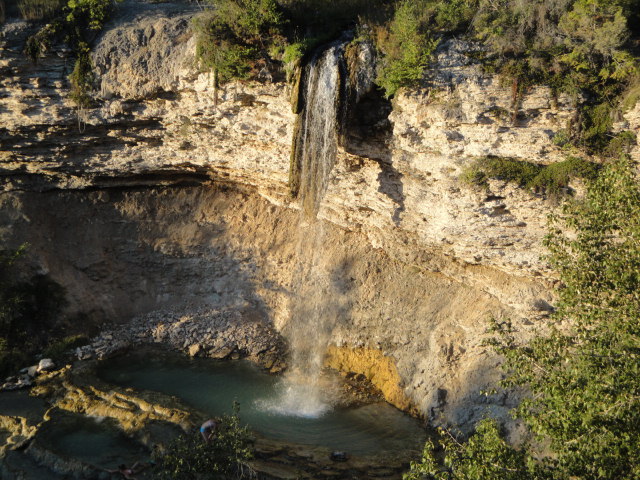
Our On The Street segment is actually well off the beaten path. Behind Fairmont, B.C.'s hot springs pool, there are the actual hot springs. Technically it is a type of man made waterfall. The natural pool is at the top of the cliff, and the small resort town built a modern type swimming pool in the side of the mountain. The pool is filled with the natural water, and then drained here every night, leaving these warm pools. This was on an RV vacation to the region. Alberta has the highest RV-per-capita ratio of anywhere in the world, believe it or not.

I couldn't bring myself to publish the end of summer edition yet. It's going to be above thirty all week.

Job Concerns For Students
What will you do when you graduate with a ridiculous amount of student debt? Find a job, hopefully. But economists aren't so sure. Latest studies indicate that, of new graduates in the next 5-10 years, up to 60% of them may only be able to find part time, low wage work. Many may find the entry level positions they are looking for, but for much less money than they had hoped for.

Of course, the myth here is that there are a lot of baby boomers retiring, and in the next 10 years, a lot of the next generation after that retiring too, which outnumber graduates, leaving a ton of jobs open. However, the ongoing recessionary woes and economic issues have led companies to downsize, leaving these vacant positions actually erased from existence. Most companies have also learned that students will work for much less than before, because competition has increased greatly. This allows companies to use foul practices like taking on full time interns for extended periods of time with no guarantee of a job at the end of it. It also allows companies to pay much less for an equal amount of labor, and extend fewer benefits.

Cyclically, eventually economic expansion (think 10 years down the road) will allow this cycle to reverse. For now, expect that your job search may be very difficult. The study also indicated that the majority of graduates would have changed jobs about 6 times before they were 30 years old. Monster.ca's study also showed that about 40% of current graduates under 30 indicated they were not in their desired field.

What can you do if you're expecting to graduate? First, work through school, don't let your student loans pay for everything. Being employable is the first step. Secondly, even if you are planning to get into something else, lock down a job after graduation as close to your field as possible, or something that has transferable skills. Working towards your desired goal is better; working farther outside the field for, say, more money isn't going to help. Employers are going to want to know why you took so much time away from the industry you supposedly are so passionate about. You are going to be left explaining to them that it wasn't enough money, or you thought you could have a better opportunity. They're going to wonder if you'll stick around long enough to make it worth while hiring you.

I Have No Editor: What Are You Ingesting? Common Myths about Food and Illness...
You might be familiar with my I have no editor sections. Well here's another one. A fantastic story.

I have (had) a friend who insisted that acupuncture had cured her of Celiac disease. I know there are many people who believe in eastern medicine practices, and find western medicine, well, less wholesome, or what have you. But understanding how the body works is a great first start, and understanding Celiac disease is the first step.


Feel free to read more in the above link. Celiac disease is a person's inability to digest wheat gluten, to the point that the sensitivity kills parts of your gastro-intestinal tract. There is no treatment or cure, but there is cutting gluten out of your diet. Oh wait, pardon me, there is a cure, and it's called acupuncture?

No.

There is the suggestion that our bodies weren't meant to digest wheat gluten in it's certain format. I say that because many different types of grasses and wheat strains may have been bred together over long periods of time making these grains outside of what the human body would normally tolerate. This is one speculation as to why something we commonly eat is harmful to so many people.

But wait. Here's the line that's important. Something we commonly eat is harmful to so many people. In fact, most of our food can be harmful to us.

If you want to avoid western medicine, you might want to try avoiding medicine entirely by trying to eat healthy, and you'll be okay.

The reason we run into problems a lot of times with our GI tracts is because we simply don't eat right. There are enough documentaries, studies, books on the subject, and our own physicians tell us time and time again that things like proper portion control, and proper balance in our diets are way off. For example, most of the people I know skip breakfast. This is a good first step in getting diabetes. Your breakfast should include something with fiber in it so your GI tract has something to digest. You should also be getting protein, carbohydrates, vitamins and minerals. So basically, something from all the food groups. What you don't need is sugar, or salt, or fats (well most fats).

I know food tastes good, but you will die if you don't eat properly. The sheer stupidity of thinking that you could have acupuncture and all of a sudden not be Celiac scares me quite a bit, because it means people are not being informed, not informing themselves, or just aren't listening. And I'm a believer in acupuncture too. Years ago, after a head on collision, it was the only thing that helped my shoulder after much physiotherapy.

Please, be informed about what you eat. Lest you become a liability to yourself, and your loved ones, not to mention a strain on the healthcare system and tax payers. All the while supporting questionable methods of food processing and shutting down small farmers. Actually, while you're becoming informed about what you should be eating, maybe watch Food Inc. again.

New Music: Middle Class Rut
Middle Class Rut, from the home of the Deftones, Sacramento, CA, recently played here with the Sonic Boom Festival. Their current single, New Low that hit the airwaves in October 2010, but didn't start getting radio play (or SAT play) until much later. That single has peaked at #5 on the US alt rock charts, off of the album No Name, No Color. Believe it or not, the band has actually been around since 2006, but with only a few non-charting EP's to their credit.

So will M.C. Rut continue to rock us in the future? A label deal means they have a new album out in 2011, even before their second single, a re-release of Busy Bein' Born hits the radio stations. But will they be all that successful? New Low is a great song that employs a simple chord structure, repeats itself, and drops out or brings in more loud noises as necessary for effect. It's actually pretty clever, but simplistic song writing.

How does the rest of the album compare? Well it's loud. I'm actually surprised that this is considered 'alt rock' and not just straight rock. In the late 1980's or early 1990's, songs like Busy Bein' Born would have been considered post-hardcore alongside greats like Helmet. The influence is definitely felt here. Can I call Zack Lopez a combination of former Filter singer Richard Patrick and the venerable Perry Farrell of Jane's Addiction. Indeed, 25 Years sounds like a faster, harder Jane's Addiction song. But this album is noise throughout. Even the supposedly quiet So Long ends with Lopez hitting the high notes in a screamy-fashion.

There is nothing here we haven't heard before. There are even some tricky Rage Against The Machine type riffs. But the sound is mostly Jane's Addiction, and some loud 90's post hardcore.

So where does M.C. Rut go from here? Well apparently on to another album. I should say that I liked the album, but I felt it was fairly repetitive and not really original at all. It's just some music of a style we haven't heard for a while. It's good to hear there is someone still doing it. But I hope they do it a little better with their next release. I give it about a 6/10.

READER POLL
If you have a second, I'd love for you to take our reader poll. The results will be published in the next issue. It'll give me a chance to quantify what you liked or disliked about the blog. It'll also give you some idea of what other people are interested in (in respect to the blog) and hey, polls are fun to take.

Take the poll here:

Results here:
http://www.zoomerang.com/Shared/SharedResultsPasswordPage.aspx?ID=L26Z2L2Z2Z2Q

Letters To The Editor
rbw2@ualberta.ca
and remember to send me this for future issues:
-what did you enjoy the best this summer (activity wise)?
-what did you miss out on?

Thank you, as always, for reading.

Thursday, August 25, 2011

Economic Collapse (plus) Farewell Layton, The Joy Formidable and a '58 Vette


Issue 11, Volume 1
Thursday, August 25, 2011

Our On The Streets section occurs in a parkade, where I often see this panama yellow '58 Corvette, complete with appropriate year of Alberta plates. The iconic American sports car seen here was still in its' infancy. Imagine that only a few years before this car could only come with a 'blue flame' inline 6 cylinder. It was the late 60's where large eight cylinder engines with more displacement and more power started to be pushed by guys like Virgil Exner, or GM president Harley Earl, champion of the 'Vette. Still a C1 (first generation corvette) in 1957, the Corvette would gain and be the poster child for Chevrolet's 283 cubic inch V8 putting out 290hp in fuel injected form. The 1958 model gained the twin headlights and more chrome seen here. Although carbureted engines would become the more popular option until the 1980's, in the late 50's Chevrolet wanted exotic sports car status. One of the most exotic and winning race cars of the era was the Mercedes SL300 (gullwing) sports car, which featured fuel injection. The 283 engine could be even had in trucks, and sedans like the bel-air 150/250 versions. This car frequently is seen in the parking lot, and is sometimes replaced by a Jeep Grand Cherokee on inclement weather days. With summer drawing to a close, this individual may not be taking his prized possession to work too much longer. By the way, tying it all in; there was a steep recession in 1958. Between 1958 and 1964, things weren't so fantastic, but they weren't nearly as bad as they are now. Probably was one of the reasons the Edsel failed so hard, thinking back.

Economic Collapse: The Second Recession
If you've ever taken a look at a chart at a bank, usually there's one on the wall somewhere. These charts are available for special order every year, and feature just about everything on them. They include the value of the dollar, value of gold, GDP, market index (TSX, S&P, NYSE), price of oil, interest rate...basically everything you could use to see how an economy is doing, except maybe unemployment (and I don't know - that very well could be on there). If you happen to take a look at one of these graphs, you'll notice that just about everything except the price of oil (which seems to go up and down based on no other factors) is always consistantly up. That means if you wait long enough, the mutual funds you hold will eventually be worth more than they are today. Meanwhile, you'll notice they take a dip and rise back up about every 10 years or so.

What you don't see: them take a dip, plateau, slowly rise, and then take another dip within 5 years.

Indeed Benjamin Tal, Cheif Deputy Economist at CIBC believes we are inches away from being in the depths of another recession. Himself, and other economists are calling this the worst period in economic recovery since the great depression.

Consumer confidence is down, says Tal, but it's a great time to buy houses. That is because the interest rate is so low, and the market is down. Meanwhile, we are experiencing a horrible time of 'stagflation' - inflation in price without economic growth. Usually what you get paid, coincides with price increases. Except one day we had huge inflation, and now everyone puts everything on their credit cards, and finances stuff. Alright, moving along...

It was estimated that inflation was about 3% overall for Canada, which wasn't too bad. The things that inflated the most, however, are things we're going to feel. So while the price of a flat screen television might have changed from $680 to $700.40, we don't necessarily need to buy a flat screen T.V. this year. We can hold on until our wage rate goes up. But what do we need to do. Well we need to eat, and put gas in our cars. Gas was up a staggering 27% over this time in 2010. Food was up something like 14%, and the cost of home insurance and utilities, 9%. Meaning, on average, paying for things you actually used went up about 17% in price. So if your household bills, say, your utilities cost you $300/mo, gasoline $200/mo, and groceries about $300/mo for a grand total of $800/mo, you would be paying $936 a month now without any increase in volume, service, amount, or pay rate.

So, what's the solution? Well, unfortunately, for Canada, all we can do is hold on. This isn't a regular recession. A regular recession would see interest rates stay low, and consumer confidence stay high to assist recovery. However, this recession was created by the United States nearly defaulting, and their dollar devaluing so much. We depend on our dollar being lower than theirs, because we are largely an exporting nation. While we hold our interest rates low (great if you're paying back prime + ___ loans or buying a house) to keep our money as worthless as possible, it's not helping.

Here are some great economic tips during this time:
-buy some mutual funds if you can afford it.
-pay down as much debt as you can right now while interest rates are low.
-find ways to save. Shut off the lights, wear a sweater, use alternative transportation.
-buy locally -> spend money on Canadian products, that will help our own economy
-eat locally -> buy your groceries at a farmers' market, etc.

These will inspire Canadian market consumer confidence, and as well, save you money, while you don't have to resort to eating KD. They will assist at a local level first, which is where the growth needs to stem from at this point.

Good luck!

Jack Layton; A Few Words
The honorable Jack Layton recently left us due to that ugliest of C words - cancer. I have only a few words to say. I think whether or not you voted for him, or particularly liked him, you recognize at this point now what he is worth to Canada as a whole, and Canadian politics. Layton brought the NDP, and its new-generation politics to become the official opposition, after being irrelevant for years. He, and the party, were champions of welfare and equality. Even if you are a Conservative, you recognize that you live in Canada, and things like 'social programs' are essential. That's what Layton stood for. Not afraid to poke fun at himself, we remember him smiling into the camera with a pitcher of beer from a pub during the Olympics. We remember him stealing Rick Mercer's bike on the Mercer report. While the NDP will get a new leader, there likely won't be another like Layton, at least for a long time to come. I would like to extend my thanks, not as anyone who is rah-rah NDP (I'm not going to reveal my political affiliation here, because it's irrelevent) to Jack Layton for his fight for Canada.

Thanks.

The Joy Formidable: The Big Roar
So once upon a time, there was this band I'd never heard of that was all of a sudden put on the Sonic Boom lineup list. And then they had sort of an infectious song called, "Whirring."

Well, I have news for you, if you've only been listening to this band on the radio. That song has a wicked double kick section that only a metal enthusiast would be able to truly appreciate that they don't play.

I have more news for you: female vocalist lead bands are...making a comeback? Making headway?

I've never seen such a time where male and female in rock music had been so equal, except at certain points. The first was the inception of rock n' roll. June was on Johnny and the rest of Sun Records' tour. Then there were a few bands along the way, until the late 60's, when Joplin killed it as the lead of Big Brother Holding Co. And then during the punk movement, there were artists like Patti Smith became famous.

But then there were the 80's, and that was horrible. There was the 90's and that was horrible too (except for grunge) and the 2000's which was also horrible. And there were the spice girls. That ruined it for everyone.

Now girls don't sing in girl groups anymore. They take control of groups like the Joy Formidable.

So how does that album shape up? Aside from the fantastic Manchester accent of Ritzy Bryan, this album is the standard in alternative rock today. A lot of synthesizers. Luckily there was that great wall of British fuzz guitar throughout, with some punk undertones that I could hang on to. Had this been another synth-pop-alt-rock standard equipment group, I wouldn't be talking about them right now. But overall, their song writing is solid.

The Joy Formidable released The Big Roar, their first full length on January 24th of this year, and it took a while, since it was their first full length, to catch on. It hit only 31 in the UK, but 8 on the US charts. Meanwhile, Whirring, the first single off of that album has hit 10 on the CAN charts, 38 on the US Rock charts, and hasn't placed on the UK charts. Crazy, eh?

The first single, Austere was actually a re-release of their 2009 UK single. For this, the album is a little disjointed. While Whirring is upbeat and fast, and sometimes a wall of noise, other songs are darker, but all with a fairly steady pace, and a lot of distortion. This wasn't a band that was influenced by The Cure, for example, or even maybe The Clash. Instead we get a lot of classic brit-rock licks, as if AC/DC snuck in there somewhere and lent them their huge Marshall stacks (indeed TJF does play with big Marshalls) but then, the sensibility of brit rock got angry and New Order showed up and gave them some keyboards too. Actually, I could probably draw a pretty good line between Joy Division and The Joy Formidable, especially with Rhydian Dafydd, bass player, indicating the album is emotionally manic depressive.

Highlights include the extended version of Whirring and other tracks like The Everchanging Spectrum Of A Lie, which force the listener to enjoy sonic walls of music. Then there are more simple tracks, like the closing The Greatest Light is the Greatest Shade that are simply enjoyable to listen to because of their poppy and simple beats.

You could easily slip this album into your 'sounds of summer' collection. I'm glad to hear a synth pop band that hasn't abandoned it's rock roots, and can still make a wall of distortion in a minor key. I rate this album about a 6.5/10. I feel TJF still has a ways to go before doing something that will really hit audiences hard and chart well. This album, being some newer songs, some written on the road, and some older EP re-releases isn't cohesive in all places, and certainly not linear. But it's a great first album from a band that you can bet will be back in a big way, if they can keep the excitement of songs like Whirring going on their sophomore effort.

Letters To The Editor
rbw2@ualberta.ca

Next Week
-It's the end-of-summer edition, with all sorts of cool wrap up articles, many suggested by you, the reader. What did you love about this summer? What did you hate? The sounds of summer music list, and photos!

Milestones
Our fashion issue proved to be our most popular issue, and we now have over 400 readers. Thank you!